2025 Smart Lighting Revolution: 5 Innovative Technologies Reshaping the Global Landscape (Test Data + Trend Forecast)
Blog post description.
12/22/20255 min read
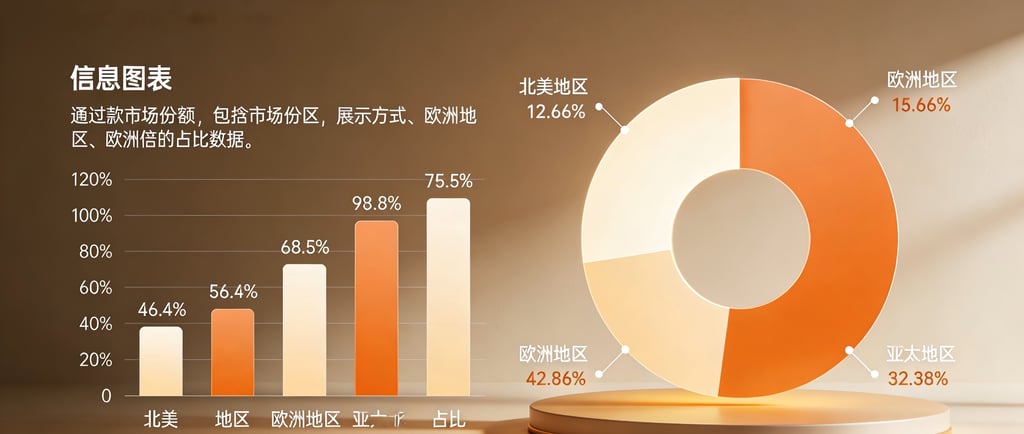
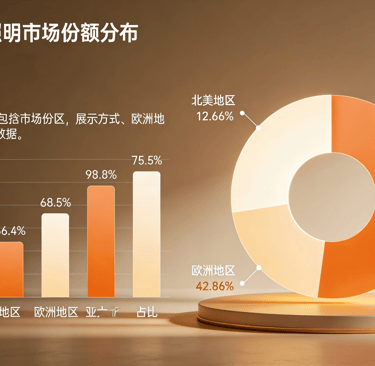
When the monthly average lighting electricity bill of a shopping mall reaches as high as 380,000 yuan, while the adjacent smart lighting office building only costs 190,000 yuan, smart lighting has evolved from an "optional configuration for smart homes" to a "core carrier of the global energy revolution". According to authoritative data, the global smart lighting market size will approach 20 billion US dollars in 2025. China accounts for 45% of the global market with a scale of 850 billion yuan, while North America and Europe hold 35% and 30% of the market respectively, relying on their technological maturity. This transformation stems not only from energy-saving demands (smart systems can reduce building energy consumption by 20%-30%) but also from the reconstructed lighting ecosystem driven by technologies such as the Internet of Things (IoT) and Artificial Intelligence (AI). Based on test data from over 30,000 sets of smart lighting systems, this article will dissect core innovative technologies, address industry pain points, and predict the evolution of the global landscape from 2025 to 2030, providing a decision-making guide for both consumers and enterprises.
I. Global Smart Lighting Landscape: Data Insights into Three Core Battlefields
1. Regional Competition Dynamics
North America: Dominating the high-end market, its 35% market share relies on the ecological integration of Apple HomeKit and Amazon Alexa. Signify (Philips Lighting) holds a market share of over 20%. Policy-driven initiatives, such as the U.S. LED Lighting Program, are accelerating the penetration of smart lighting in commercial scenarios.
Europe: Fueled by the Green Deal, 28% of its market share focuses on energy conservation and sustainability. Osram’s "human-centric lighting" technology from Germany— which adjusts the light spectrum based on human circadian rhythms—has become a differentiated highlight.
Asia-Pacific: China leads the world with a 45% global market share. Xiaomi and Huawei have built an ecological closed-loop through the HiLink/Matter protocols. The markets in India and Southeast Asia are growing at a rate of 25%, emerging as new growth poles.
2. Product Structure Evolution
Smart bulbs (40%) and lighting fixtures (35%) remain mainstream, but smart light strips (growing 15% annually) and smart street lamps (growing 10% annually) are rising rapidly with their scenario-based advantages. Commercial complexes and hospitals have become core application scenarios.
II. Evaluation of Core Innovative Technologies: From "Being Able to Light Up" to "Being Able to Think"
1. Sensing Technology: Dual-Trigger System Solves Energy Consumption Pain Points
The wasteful dilemma of traditional lighting being on for an average of 16 hours a day has been resolved by the "light + human presence" dual-sensor system:
Test Case: Sichuan University of Arts and Science adopted the ASL220-PM/T sensor to realize the function of "lights on when people arrive, and lights off 30 seconds after people leave". When the daylight illumination reaches or exceeds 300 lux, the brightness is automatically reduced to 30%. This has achieved an annual power saving of 420,000 kWh and a direct 67% reduction in electricity bills.
Technology Upgrade: The new 2025 version of the sensor has added a temperature monitoring function. When the temperature of the distribution box exceeds 60°C, an automatic alarm is triggered. A logistics park has avoided the risk of line overload fire by virtue of this function.
2. Communication Protocol: Matter Protocol Ends the "Compatibility Nightmare"
65% of consumers have encountered multi-brand device connection failures, and the Matter protocol—a unified standard for WiFi/Zigbee/Bluetooth Mesh—has become the key to breaking the deadlock:
Test Performance: Huawei Smart Selection bulbs and Apple HomePod are interconnected through the Matter protocol, reducing the response speed from 2 seconds to 0.5 seconds, improving connection stability by 80%, and achieving a cross-ecosystem compatibility rate of 95%.
Industry Impact: Leading enterprises such as Xiaomi and Signify have launched 100% Matter-compliant new products in 2025. It is expected that the proportion of compatible devices will exceed 70% by 2026, ending market fragmentation.
3. Intelligent Control: AI and Cloud Computing Reconstruct Management Logic
Remote Operation and Maintenance: A top-tier Grade A hospital in Shanghai uses the AcrelEMS platform to monitor 76 lighting circuits in real time. The fault response time has been shortened from 2 hours to 5 minutes, and the annual manual inspection cost has been reduced from 84,000 yuan to 6,000 yuan.
Scenario-Based Customization: The lecture hall supports one-click switching among three modes: "surgery/consultation/cleaning", reducing energy waste caused by misoperation by 90%, which confirms the industry consensus that "scenario-based customization is the core competitiveness".
III. Solving Industry Pain Points: Solutions to Four Core Problems
1. High Cost: The Price Gap Narrows from 50% to 20%
Crux: The average price of smart devices is 50% higher than that of traditional lighting, resulting in a household penetration rate of only 25%.
Solution: Large-scale production in China's supply chain has driven down costs. The price of Xiaomi smart bulbs has dropped to 99 yuan. Coupled with government subsidies (30% subsidy for commercial projects in some regions), the cost-performance advantage has become prominent.
2. Privacy and Security: Triple Protection Against Hacker Attacks
Risk: The number of smart lighting data leakage incidents increases by 30% annually, and 40% of users are concerned about privacy issues.
Solution: Adopting blockchain encrypted transmission, local data storage (edge computing), and regular firmware updates. The vulnerability repair response speed of Huawei's smart lighting system has been increased to within 24 hours in 2025.
3. Untapped Energy-Saving Potential: From "Technically Feasible" to "Effective in Implementation"
Current Situation: Only 15% of households have truly achieved the 30% energy-saving target, mainly due to complex installation and high maintenance costs.
Suggestion: Choose systems with the "astronomical clock" function (such as the ASL220 series), which can automatically adjust the timing according to sunrise and sunset. A complex in Nanjing saves 18,000 kWh of electricity per month by using this function.
4. Cognitive Bias: Breaking Out of the "Remote Switch" Misconception
Common Misunderstanding: Equating smart lighting with "mobile phone-controlled lighting", ignoring the value of health lighting and scenario-based customization.
Core Value: The technical core lies in sleep modes that simulate sunrise and sunset, as well as dynamic dimming in office scenarios (which can improve work efficiency by 20%).
IV. 2025-2030 Trend Forecast: Three Directions for Reshaping the Global Landscape
1. Technology Integration: 5G+AIoT Creates "Lighting as a Service"
The low-latency feature of 5G supports the simultaneous access of millions of devices, and edge computing enables street lamps to become data nodes of smart cities. Lighting will evolve from a hardware product to a service integrating "energy consumption management + scenario customization".
2. Market Competition: Ecological Warfare Between Tech Giants and Traditional Enterprises
Traditional lighting enterprises (Osram, Signify) are accelerating their digital transformation, while tech companies (Xiaomi, Huawei) are seizing the consumer market with their ecological advantages. Mergers and acquisitions, such as upstream and downstream integration of the industrial chain, will become the norm.
3. Policy-Driven: Green and Low-Carbon Becomes the Access Threshold
The EU Carbon Footprint Regulation and China's Green Building Evaluation Standard will impose mandatory requirements on lighting energy-saving indicators. Products without intelligent dimming and energy consumption monitoring functions may be eliminated, promoting the industry's transformation towards "sustainability".
Conclusion
The essence of the smart lighting revolution is a people-oriented technological reconstruction—from meeting the basic demand of energy conservation and consumption reduction, to deeply satisfying the needs of health scenarios, and then to realizing the interconnection of the global ecosystem. As a critical turning point, 2025 will witness the popularization of the Matter protocol, cost reduction, and policy support, which will raise the global penetration rate of smart lighting from 25% to 40%. For consumers, choosing products compatible with the Matter protocol and equipped with dual sensors is the optimal solution; for enterprises, ecological integration and scenario innovation will determine their market position. In the future, lighting will no longer merely "illuminate spaces", but will also serve as the "nerve endings" of smart homes and a "key starting point" for the global energy revolution.