The Ultimate Smart Home LED Light Buying Guide for 2026
Gone are the days when a "smart bulb" merely meant controlling your lights with an app. In 2026, the focus has shifted from individual gadgets to systemic intelligence and interoperability. The average consumer is no longer asking "Which bulb is brightest?" but rather "Will this work seamlessly with my existing setup, and will it still work in five years?
2/24/20267 min read
Introduction: Why 2026 is the Year of Ecosystem Intelligence
Gone are the days when a "smart bulb" merely meant controlling your lights with an app. In 2026, the focus has shifted from individual gadgets to systemic intelligence and interoperability. The average consumer is no longer asking "Which bulb is brightest?" but rather "Will this work seamlessly with my existing setup, and will it still work in five years?"
According to industry analysis, the modern smart lighting market is defined by stability, ecosystem compatibility, and the rise of the Matter protocol . Buyers are increasingly aware that a smart home should be a cohesive unit, not a collection of fragmented remotes and apps. This guide will help you cut through the noise, focusing on the technical realities that actually impact your daily life.
Part 1: Decoding the Core Specifications
Before you fall in love with a bulb's design or color range, you need to understand the underlying hardware. These specs determine whether a bulb will meet your practical needs.
Lumens and Brightness: Beyond the Wattage
In the incandescent era, we shopped by watts. In the LED era, lumens are the true measure of brightness. For general ambient lighting in a living room or bedroom, you typically want between 800 and 1100 lumens (equivalent to a 60W-75W incandescent) . However, 2026 has seen a push toward higher outputs; some newer models, like the Govee RGBWW, now offer up to 1200 lumens, making them suitable for larger spaces or rooms with high ceilings .
For accent lighting or fixtures in hallways, lower lumens (400-450) are often sufficient to create a cozy atmosphere without glare .
Color Temperature and Accuracy: The Kelvin Scale and CRI
Light isn't just about brightness; it's about feeling.
Kelvin (K) Scale: This measures the "warmth" or "coolness" of white light. A lower number (2700K) emits a warm, yellowish glow perfect for relaxation, while a higher number (5000K-6500K) produces a cool, blueish light ideal for focus and task lighting . The best smart bulbs offer a tunable white range (typically 2700K to 6500K), allowing you to shift from a cozy fireside feel to a crisp daylight ambiance with a voice command .
CRI (Color Rendering Index): This measures how accurately a light source reveals the true colors of objects compared to natural sunlight. For areas where color accuracy matters—like a home office, kitchen, or art studio—look for bulbs with a CRI of 90 or above .
Part 2: Navigating Connectivity and Ecosystems
This is the most critical aspect of a 2026 purchase. Choosing the wrong connectivity standard can lock you out of future features or leave you with a "smart" device that requires a dozen different apps.
Wi-Fi vs. Bluetooth vs. Hub-Based Systems
Wi-Fi Bulbs: These connect directly to your home router. They are great for beginners because they require no extra hub. However, flooding your network with dozens of Wi-Fi bulbs can cause congestion and latency issues .
Bluetooth Bulbs: These offer a simple, direct connection to your phone but lack remote access when you are away from home unless paired with a bridge. They are best for single-room experiments .
Hub-Based Systems (Zigbee / Thread): This is the gold standard for reliability. Devices like Philips Hue use a hub to create a separate mesh network (Zigbee or Thread) that doesn't clog your Wi-Fi. This results in faster response times and greater stability, especially as you scale up to dozens of lights .
The Matter Protocol: The Universal Translator
If there is one term to remember for 2026, it is Matter. Matter is a new, open-source smart home standard designed to ensure devices work seamlessly together, regardless of brand .
Why it matters: Before Matter, a "Works with Alexa" sticker didn't guarantee it worked with Google Home or Apple HomeKit. Matter-certified devices like the AiDot Linkind Matter Smart Light Bulb or the Govee H6006 break down these silos, allowing you to control your lights via Apple Home, Google Home, or Amazon Alexa simultaneously without compatibility headaches .
The Catch: Ensure that both your smart lights and your hub/controller are Matter-certified to take advantage of this seamless integration .
Part 3: The Top Smart LED Bulbs of 2026 (By Category)
Based on expert reviews from PCMag, WIRED, and eufy, here are the standout performers for 2026 .
Best Overall: AiDot Linkind Matter Smart Light Bulb
This bulb has consistently topped charts due to its versatility. It displays 16 million rich colors, offers a wide white temperature range, and crucially, supports the Matter protocol. This ensures it integrates flawlessly with virtually any smart home platform. Reviewers also praise its "power usage reports," which help you track energy consumption .
Pros: Rich colors, excellent Matter support, detailed app insights.
Cons: Max brightness limited to 800 lumens (standard for A19).
Best Budget/Value: Philips Dimmable A19 Smart Wi-Fi Wiz
You don't need to break the bank to enter the smart lighting world. The Philips Wiz line offers a surprisingly robust feature set for a fraction of the cost of the Hue line. It connects via Wi-Fi (no hub needed) and supports routines, schedules, and "Light Rhythms" that automatically adjust color temperature throughout the day .
Pros: Affordable, no hub required, dynamic light adjustment.
Cons: Setup can sometimes be finicky; limited ecosystem integration compared to Hue.
Best for High Brightness: Govee RGBWW Smart Bulbs (H600A)
If you want your room flooded with light, Govee's 1200-lumen offerings are unmatched. Models like the H600A and H6010 provide exceptional brightness for larger living areas. Beyond raw power, Govee's app is a powerhouse for customization, offering music sync, 50+ scenes, and DreamView for multi-light coordination .
Pros: Class-leading 1200 lumens, extensive app features, music sync.
Cons: Some models lack native Apple HomeKit support (though many are now Matter-ready).
Best for Outdoors: eufy Permanent Outdoor Lights S4
Outdoor lighting is a different beast, requiring durability and often, security features. The eufy S4 stands out by pairing vibrant RGB lighting with a built-in radar motion sensor. This smart sensor reduces false alarms from animals or leaves, and can trigger a "follow glow" to light your path or a full flood of light for security .
Pros: IP67 waterproof, integrated radar security, vibrant colors.
Cons: Premium pricing.
Part 4: Room-by-Room Application Strategies
Buying smart lights isn't a "one-size-fits-all" purchase. Here is how to tailor your choices to specific rooms, based on expert installation advice .
Living Room and Entertainment Spaces
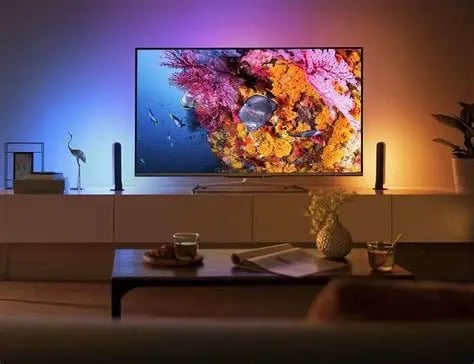
The goal here is layered ambiance. Avoid relying on a single overhead fixture. Instead, use a combination of light strips behind the TV (for bias lighting that reduces eye strain and makes colors pop) and smart bulbs in floor lamps to create zones .
Recommended Gear: Philips Hue Play Gradient Lightstrip for TVs or Govee RGBIC Light Bars. These create immersive experiences that can sync with your music or movie content .
Home Office and Productivity
Your workspace lighting should enhance focus and reduce fatigue. Utilize tunable white bulbs that shift from warm to cool based on the time of day. A bright, cool white (4000K-5000K) during work hours boosts alertness, while a warmer tone in the late afternoon signals your body to wind down .
Recommended Gear: A monitor-mounted light bar like the BenQ ScreenBar or smart light panels like Nanoleaf that add aesthetic interest without causing screen glare .
Bedrooms and Relaxation
In the bedroom, the priority is gentle, controllable light that doesn't disrupt sleep cycles. Under-bed light strips are a game-changer, providing just enough illumination for midnight bathroom trips without blinding you or your partner. Smart bedside lamps can be programmed to simulate sunrise in the morning, making waking up more natural .
Recommended Gear: Govee Smart LED Strip Lights (for under-bed placement) and portable lamps like the Wiz Portable Lamp for flexibility .
Part 5: The Energy Efficiency Reality Check
Do smart lights actually save energy? The answer is more nuanced than the marketing suggests.
The "Vampire Drain" of Connectivity
While LEDs are inherently efficient, smart bulbs are not quite as efficient as their "dumb" LED counterparts. The always-on internal electronics (Wi-Fi/Bluetooth radios) consume a small amount of standby power, often referred to as vampire drain. In a home with 20 smart bulbs, this standby consumption can add up to 50-100 kWh per year .
Automation vs. Behavior
The real savings come from behavioral changes enabled by automation. If you are diligent about turning off lights, a standard LED might be more efficient. However, for most people, smart lights save energy through:
Occupancy Sensors: Lights turn off automatically when you leave a room.
Scheduling: Lights are never accidentally left on all day.
Dimming: Reducing brightness by 50% can cut energy use by nearly 50% .
Pro Tip: Use smart bulbs in hard-to-reach fixtures (like high ceilings) and areas where automation is key. For closets or rarely used spaces, a standard LED might be the greener choice .
Part 6: Installation Pitfalls and Pro Tips
Even the best technology fails if installed poorly. Here are real-world lessons from installers and reviewers .
The "Stickiness" Nightmare
When installing light strips, surface preparation is everything. Clean your surfaces thoroughly with alcohol before sticking. Dust and grease will cause the adhesive to fail, and your beautiful new light strip will end up on the floor .
The Wi-Fi Congestion Trap
Most smart bulbs only operate on the 2.4GHz band. If you live in a densely populated area, this band can be incredibly crowded, leading to slow response times. Consider setting up a dedicated IoT (Internet of Things) network or investing in a hub-based system like Lutron Caséta or Philips Hue, which use their own wireless frequencies to bypass Wi-Fi congestion entirely .
Plan Before You Stick
Before permanently mounting light strips or bars, test them in place. Hold them up with painter's tape and view them from your couch or bed at night. Light placement drastically affects the mood, and moving them after the adhesive has set is a frustrating experience .
Part 7: The Future-Proofing Checklist
To ensure your investment doesn't become obsolete in two years, run through this checklist before clicking "buy":
Is it Matter Certified? This is the single best indicator of long-term compatibility .
Does it Support Your Primary Voice Assistant Natively? While Matter helps, native support for Alexa, Google, or Siri is always a plus.
What is the Lifespan? Look for bulbs rated for 25,000 to 50,000 hours. A 50,000-hour bulb could last over 17 years if used for 8 hours a day .
Check the Socket Type: Ensure you are buying the correct base (E26/E27 standard in the US, E12 for candelabras, GU10 for spotlights) .
Conclusion: Light That Adapts to You
The best smart home LED light in 2026 is no longer just the one with the brightest colors or the sleekest design. It is the one that disappears into the fabric of your home, responding intuitively to your routines, your moods, and your commands without friction.
Whether you opt for the universal compatibility of the AiDot Linkind, the raw brightness of Govee, or the rock-solid stability of a Philips Hue system, the goal remains the same: to create a living environment that adapts to you, rather than you adapting to it. By focusing on ecosystem compatibility, understanding your room-specific needs, and acknowledging the realities of energy use, you can build a smart lighting setup that is truly intelligent, efficient, and enduring.